Showing posts with label Parp parp. Show all posts

Wednesday, July 27, 2011

The magic of e-reading

Do you remember that there was once a time when you didn't have a mobile phone, and no one else you knew did?

So if you wanted to get in touch, you'd have to (i) remember their phone number and (ii) call their house to see if they were in? Or alternatively – and even more outlandishly – you'd have to (i) remember where they live and (ii) drop by to see if they were in.

How on earth did we get by wasting so much time? Walk round to someone's house! The very idea of it.

It's very odd how mobile phones, laptops, social media, iPods etc etc have all insinuated their way into our lives subtly and irreplaceably, to the point where we take them completely for granted.

They start appearing and you think: "That's ridiculous – I never needed [whatever the gadget does] before. Why would I need that now?" Before you know it, you get panicky if you can't check Facebook while you're on the toilet. The medium is the message, innit?

So I must report unto you – my readers – then, that I am now the owner of an Amazon Kindle (thanks to all the Sicilies for my Father's Day present!) And having been sceptical about them before, experience suggests that I should approach this new bit of technology in my life with the innocent openness to having one's mind changed of a new boy turning up for his first day at Pyongyang Central Penitentiary College of FE.

Having lugged a hardback copy of "Against the Day" (1,085 pages) around with me for the months it took me to read (TWICE), I am already feeling the benefit in terms of improved posture.

However, the Kindle is affecting my habits in other ways. It is changing what I read – for the simple reason that there are hundreds of great books out there (many of them here) that are FREE.

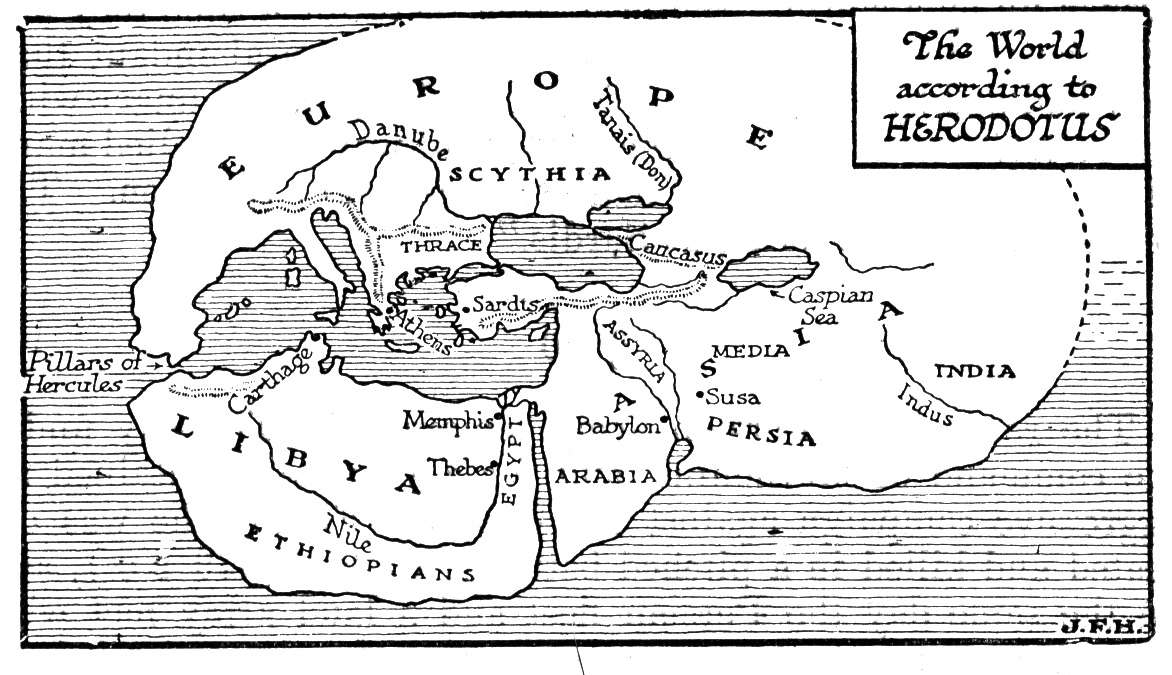
Now, I don't know about you, but I wouldn't pick up a second-hand copy of Herodotus' "The Histories" for any price. On the one hand, it would take up too many of the sparse cubic feet in my tiny house. On the other, if it was shit, I would feel obliged to read it to the end because I'd paid for it.

I know what you're thinking. No, not "oh god, he's talking about Greeks again – I thought this was going to a funny one or an angry one". What you are thinking is Herodotus' work would probably not have survived the last 2,600 years and become a central part of the Western literary canon if it had been shit.

Well, believe me – despite the lure of "The Histories" being effectively the novelisation of 300, I would not have stuck with old Herodotus past that endless description of "how big various things in Egypt are" in the second book if it hadn't been free. And I am probably a more enlightened person for doing so. My bag is certainly enlightened. BOOM BOOM.

It still hurts me mentally to think that I gave up reading "On the Road" TWICE because it was so awful after paying full price for a brand new copy. And that was about 17 years ago.

But now, I can pick up books by a whole host of authors and give up on them if they're a load of old crap like Kerouac, because they didn't cost me a penny! In your face, economics of publishing! And in your face, self-imposed obsessive-compulsive rules of behaviour!

So, if you like sci-fi and you haven't read HG Wells or Jules Verne – stop paying money for new books and read the foundations of the freaking genre for nothing. If you like horror, Arthur Machen and HP Lovecraft. If you like crime, Conan Doyle. And you needn't spend a penny. Well, if you already have an e-reader that is.

Plus, it's better than the library, because (i) you don't have to remember to take anything back, (ii) it's likely to exist for more than a couple of years to come, and (iii) best of all - it's not full of smelly vagrants and weirdos!

Monday, June 13, 2011

Asphodel Field journal


The ancient Greek underworld had three main areas: the Elysian Fields, Tartarus and the Asphodel Fields.

The first two correspond roughly to the Christian concepts of heaven and hell – although admission to the former was more achieved on the basis of heroism than virtue, while the latter was reserved less for the evil than for those who had simply pissed the gods off.

On that, the Greek gods do have a certain compelling appeal. Rather than having to perform logical and verbal contortions to explain how an all-powerful, all-good god allows the world to be such a bloody awful place for most people, most of the time, the Greeks had simply to declare that their gods were a bunch of spoiled arseholes and have done.

Indeed, with its sexual incontinence, all-consuming egocentricity, tendency for random violence and a general attitude reminiscent of an over-tired toddler, the Greek pantheon was a lot less like the Christian god than a bunch of Premiership footballers.

Having three principal zones, the Greek underworld was mathematically 25 per cent less good than The Crystal Maze then, but 50 per cent better than the Judaeo-Christian afterlife.

"Hang on," I hear you say: "What about Limbo?"

To which I'd reply, no thanks it's a bit early in the morning and my back still hurts. PARP PARP.

Well, rather than turn to centuries of theological discussion on this point, I'd simply refer to Wikipedia, which says:

1. Limbo (and Purgatory, before anyone else starts on that) are sub-parts of hell.

2. Limbo is not an officially doctrinally recognised part of any Christian tradition.

Plus, I'm only saying it's not as good as The Crystal Maze.

Obviously, only when Richard O'Brien was running it. For all that "Swords of a Thousand Men" was a fine record, Ed Tudor-Pole was neither a patch on O'Brien, nor was his maze 50 per cent better than the whole heaven-hell combo.

Anyway, you may recall that some time ago, I mentioned the Asphodel Fields – the third and indeed largest part of the Greek underworld.

Before we return to it, another slight digression. The Greek underworld was commonly held to be accessible to mortals via caves and tunnels. Go into the cave, down the tunnel – there's the River Styx, Cerberus, Sisyphus pushing his rock up a hill and all the other familiar stuff of legend.

Now, I accept that the Greeks lacked our sense of scientific falsifiability, but it's hard to imagine that the following conversation (or one like it) never took place:

First Greek: "I hear you went down that tunnel to the Underworld."

Second Greek: "Yeah."

First Greek: "Was the Underworld there then?"

Second Greek: "Well, I didn't find it."

They should then, of course, have concluded that the Underworld was not in fact there. Although I expect – faith playing a typical part in leading people to deny the evidence of their senses and their sense – that they concluded it must, in fact, have been down a different hole.

Greeks, of course, were famed for having long arguments – although the course they took and the conclusions they reached rarely resembled anything you or I would regard as probable. That is, none of the works of Plato relate a tired and emotional Thrasymachus calling Socrates a knobhead and smashing him over the head with an amphora.

It has long been an ambition of mine to rewrite the works of Plato, so that Socrates' interlocutors respond with slightly fewer leading questions and less arse-kissing, and treat the insufferable tit with the degree of patience he deserves. For example, from Book 4 of "The Republic":

Socrates: Let us suppose that philosophical minds always love knowledge of a sort which shows them the eternal nature not varying from generation and corruption.

Glaucon: Not this again.

Socrates: And further, I said, let us agree that they are lovers of all true being; there is no part whether greater or less, or more or less honourable, which they are willing to renounce; as we said before of the lover and the man of ambition.

Glaucon: If you say so.

Socrates: And if they are to be what we were describing, is there not another quality which they should also possess?

Glaucon: I'm sure you're about to tell me.

Socrates: Truthfulness: they will never intentionally receive into their mind falsehood, which is their detestation, and they will love the truth.

Glaucon: Shall we go to the pub? Maybe there will be some hot vestal virgins in.

Socrates: 'Maybe' is not the word; say rather 'must be affirmed:' for he whose nature is amorous of anything cannot help loving all that belongs or is akin to the object of his affections.

Glaucon: What?

Socrates: And is there anything more akin to wisdom than truth?

Glaucon: I'm going now. See you tomorrow.

Socrates: Can the same nature be a lover of wisdom and a lover of falsehood?

Glaucon: (from afar)....Bye!

Back to the Asphodel Fields – pictured here in the imagination of Stuckist Elsa Dax – which, I'm sorry to say, is where most of us are heading if Greek eschatology is correct.

This part of the Underworld is set aside for those who lead unremarkable lives, neither good nor bad – those of whom (in one of my favourite quotes) Thoreau says:

"The mass of men lead lives of quiet desperation. What is called resignation is confirmed desperation."

The Asphodel Fields are just like real life, only more boring and rubbish. No one quite remembers who they were before, and they just aimlessly wander around like nutters in a giant bus station. For us moderns, I expect it would resemble an endless out-of-town retail park, when all the shops are closed...

So that, dear friends, is the ancient Greeks' message to us and we'd do well to remember it: you are going to be bored forever unless you live a life that is heroic or which really pisses the gods off. If you're really unlucky, you might even end up stuck talking to Socrates for eternity.

Thursday, May 26, 2011

'King Boring


It is simply not good enough in these times that the monarchy carries on with its dreary rules on naming kings and queens.

Look at them all (up there). If they ever get a crack of the whip, Prince Charles will be King Charles the Third and Prince William will be King William the Fifth. YAWN.

Were you even aware there was a William the Fourth (1830-1837)? I think the sole evidence of his existence is in pub names.

Way back when, monarchs had much better titles than they do today – and I think that reviving some of these traditions is essential if the Royals are to have continuing relevance after we the public have forgotten about Pippa Middleton's arse.

Broadly, there are two alternatives to the tedious, backward-looking numerical sequence.

  • The Viking approach – giving your monarch a (not always complimentary) nickname on the basis of some characteristic. For example, Harald Bluetooth and multiple Sven Forkbeards.
  • The "the" approach – much more common throughout history, you've got [First name] the [What are they like?]. Hence, William the Conqueror, Charles the Bald, William the Silent, Pepin the Short, August the Strong, Joanna the Mad and my personal favourite (and a Viking exception to the breakdown suggested, no less) Ivar the Boneless.

A short digression on August the Strong. He was – amongst other things - King of Poland in the late 17th and early 18th century.

Back then, the King of Poland was "elected" – which meant in practice that it was a runners-up prize offered by other rulers to aristocratic Europeans unlikely to get to the Big Chair in their own countries.

Managing director of the IMF anyone? PARP PARP.

And "the Saxon Hercules" allegedly fathered 365 children in his time, so "the rutting chimpanzee" has a bit of catching up to do.

Anyway, back to our own unimpeachably admirable Saxe-Coburg-Gothas.

Sometimes, you have to go backwards to go forwards.

And I think that the public could really learn to love King Charles the Big-Eared or King Charles the Tedious.

Indeed, I am normally of a fairly republican frame of mind, but even I would be glad to get behind the monarchy if we were looking at King William Horseface or – better yet - King Harold Gingernuts.

Thursday, April 7, 2011

A reet Yorkshire day out

Last Sunday, the family and I went on an outing to Settle in the Dales.

Here is the receipt showing what we had to eat. How much more Yorkshire can you get than that?

Leaving aside the peculiarity of the name "Ye Olde Naked Man Cafe"- an establishment dating back to the 1660s, when presumably it was acceptable to naked and old in the north of England - it was a fine day out. Thankfully, Roger Jr did not ask what a naked man is.

Despite being Lincolnshire folk originally, and moving up here from Surrey, we are adapting quickly to Yorkshire habits. We have a whippet. I wear a flat cap. I inhaled sharply when I saw the price of Sheep Biscuits.

In the words of Victoria Wood, "You may not be from Yorkshire, but you're just as boring as if you were". That's us.

We have yet, however, to take some things, like Rugby League, "breadcakes" and casual racism into our hearts.

I still find it shocking when complete strangers (most recently an estate agent) throw complaints about "The Asians" into conversation. Have I got a racist-looking face? Perhaps there are some things - like Lincs' own stuffed chine - you have to be a native to appreciate.

Anyway, old naked men notwithstanding, Settle is a lovely little town which I'd recommend to anyone. I've never seen such a concentration of hardware stores in such a small area.

And if you need any "Bottogas", well Dugdales is the place for you.

Come on, I know it's from the '50s or earlier, but the name "Bottogas" would have suggested farting to Queen Victoria, let alone anyone in the present day.

Wednesday, March 30, 2011

You don't understand it because you're an idiot

Just returned from two (working) in London, where people understand that the barriers at railway stations require you to put your ticket in, take it out and then walk through the gate that opens.

Ticket barriers were installed in Leeds about two years ago, and STILL every day thousands of people stand gaping at them like a dog presented with a tin opener: they know that this strange contraption in some way holds the key to getting what they want, but making it work is simply beyond their cognitive capabilities.

As a result of this, at rush hours there are at least two rail employees stationed at the gates opening them up for people who can't work out the whole "put the ticket in the slot" puzzle – one by one, upon the presentation of their ticket.

Naturally, this leads to a colossal build-up of people because instead of using 15 or so gates, the majority of rail travellers use two.

Like the prehistoric fish that first decided to chance their arm on the whole land-dwelling lark, a few brave souls then have free rein over the rest of the vacant gates.

Unfortunately, most of them end up metaphorically gasping and drowning in the fresh air of their new environment – trying to stick the ticket into the wrong hole, or simply gazing at the machine as if instructions for use will shortly appear on it.

Typically, I end up behind one of these people. Up they go, walking brisky and confidently towards a gate. "This person knows what they're doing", I think as I fall into line with them.

And then...stop.

Dum-de-dum...Gotta have my bowl, gotta have cereal....Hmmmm... what is this curious device blocking my way? It has a picture that looks a bit like that bit of cardboard I was given earlier on it by that man in the blue hat. I wonder where that is now? Maybe it's in one of my pockets. Or my handbag/wallet/purse, perhaps. Or maybe it's in the sky somewhere up there. I have no idea what to do with it if I do actually find it, but hopefully it will all become clear if I just stand here...

I express my rage and frustration at this state of affairs by sighing and tutting quietly when I'm sure no one is looking. How I long to simply hurl them bodily aside yelling "YOU DO IT LIKE THIS!!!"

Thank god they don't have them at Shipley. The locals would be round with pitchforks and torches in a flash.

Talking of dogs (which, you may recall, at one point earlier in this piece, I was) - if it's true that people come to look like their dogs, then there must be a hell of a lot of overweight basset hounds living in Leeds. Badoom-TISH!

Monday, January 31, 2011

Must try harder

Last night my lovely wife Elvira of Castille took me out for a birthday meal. It was splendid. We saw some massive bottles of champagne in a special room...

Now, the normal sized cork in a bottle the size of a dustbin was interesting, but it's the names that interest me the most.

These bottles were probably Nebuchadnezzars or Methuselahs. Biblical characters, right?

So (...drum roll...) where in the Bible does Magnum appear?

Lo, he did drive around the walls of Jericho seven times in his red Ferrari, and he did smite the Midianites before turning to the camera and raising an eyebrow. (Higgins, 3:16)

I'll get my coat.