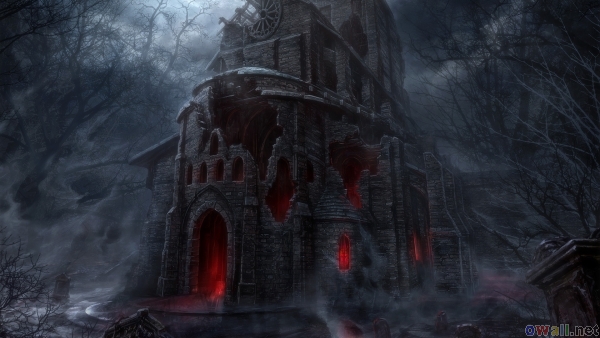
The ancient Greek underworld had three main areas: the Elysian Fields, Tartarus and the Asphodel Fields.
The first two correspond roughly to the Christian concepts of heaven and hell – although admission to the former was more achieved on the basis of heroism than virtue, while the latter was reserved less for the evil than for those who had simply pissed the gods off.
On that, the Greek gods do have a certain compelling appeal. Rather than having to perform logical and verbal contortions to explain how an all-powerful, all-good god allows the world to be such a bloody awful place for most people, most of the time, the Greeks had simply to declare that their gods were a bunch of spoiled arseholes and have done.
Indeed, with its sexual incontinence, all-consuming egocentricity, tendency for random violence and a general attitude reminiscent of an over-tired toddler, the Greek pantheon was a lot less like the Christian god than a bunch of Premiership footballers.
Having three principal zones, the Greek underworld was mathematically 25 per cent less good than The Crystal Maze then, but 50 per cent better than the Judaeo-Christian afterlife.
"Hang on," I hear you say: "What about Limbo?"
To which I'd reply, no thanks it's a bit early in the morning and my back still hurts. PARP PARP.
Well, rather than turn to centuries of theological discussion on this point, I'd simply refer to Wikipedia, which says:
1. Limbo (and Purgatory, before anyone else starts on that) are sub-parts of hell.
2. Limbo is not an officially doctrinally recognised part of any Christian tradition.
Plus, I'm only saying it's not as good as The Crystal Maze.
Obviously, only when Richard O'Brien was running it. For all that "Swords of a Thousand Men" was a fine record, Ed Tudor-Pole was neither a patch on O'Brien, nor was his maze 50 per cent better than the whole heaven-hell combo.
Anyway, you may recall that some time ago, I mentioned the Asphodel Fields – the third and indeed largest part of the Greek underworld.
Before we return to it, another slight digression. The Greek underworld was commonly held to be accessible to mortals via caves and tunnels. Go into the cave, down the tunnel – there's the River Styx, Cerberus, Sisyphus pushing his rock up a hill and all the other familiar stuff of legend.
Now, I accept that the Greeks lacked our sense of scientific falsifiability, but it's hard to imagine that the following conversation (or one like it) never took place:
First Greek: "I hear you went down that tunnel to the Underworld."
Second Greek: "Yeah."
First Greek: "Was the Underworld there then?"
Second Greek: "Well, I didn't find it."
They should then, of course, have concluded that the Underworld was not in fact there. Although I expect – faith playing a typical part in leading people to deny the evidence of their senses and their sense – that they concluded it must, in fact, have been down a different hole.
Greeks, of course, were famed for having long arguments – although the course they took and the conclusions they reached rarely resembled anything you or I would regard as probable. That is, none of the works of Plato relate a tired and emotional Thrasymachus calling Socrates a knobhead and smashing him over the head with an amphora.
It has long been an ambition of mine to rewrite the works of Plato, so that Socrates' interlocutors respond with slightly fewer leading questions and less arse-kissing, and treat the insufferable tit with the degree of patience he deserves. For example, from Book 4 of "The Republic":
Socrates: Let us suppose that philosophical minds always love knowledge of a sort which shows them the eternal nature not varying from generation and corruption.
Glaucon: Not this again.
Socrates: And further, I said, let us agree that they are lovers of all true being; there is no part whether greater or less, or more or less honourable, which they are willing to renounce; as we said before of the lover and the man of ambition.
Glaucon: If you say so.
Socrates: And if they are to be what we were describing, is there not another quality which they should also possess?
Glaucon: I'm sure you're about to tell me.
Socrates: Truthfulness: they will never intentionally receive into their mind falsehood, which is their detestation, and they will love the truth.
Glaucon: Shall we go to the pub? Maybe there will be some hot vestal virgins in.
Socrates: 'Maybe' is not the word; say rather 'must be affirmed:' for he whose nature is amorous of anything cannot help loving all that belongs or is akin to the object of his affections.
Glaucon: What?
Socrates: And is there anything more akin to wisdom than truth?
Glaucon: I'm going now. See you tomorrow.
Socrates: Can the same nature be a lover of wisdom and a lover of falsehood?
Glaucon: (from afar)....Bye!
Back to the Asphodel Fields – pictured here in the imagination of Stuckist Elsa Dax – which, I'm sorry to say, is where most of us are heading if Greek eschatology is correct.
This part of the Underworld is set aside for those who lead unremarkable lives, neither good nor bad – those of whom (in one of my favourite quotes) Thoreau says:
"The mass of men lead lives of quiet desperation. What is called resignation is confirmed desperation."
The Asphodel Fields are just like real life, only more boring and rubbish. No one quite remembers who they were before, and they just aimlessly wander around like nutters in a giant bus station. For us moderns, I expect it would resemble an endless out-of-town retail park, when all the shops are closed...
So that, dear friends, is the ancient Greeks' message to us and we'd do well to remember it: you are going to be bored forever unless you live a life that is heroic or which really pisses the gods off. If you're really unlucky, you might even end up stuck talking to Socrates for eternity.